
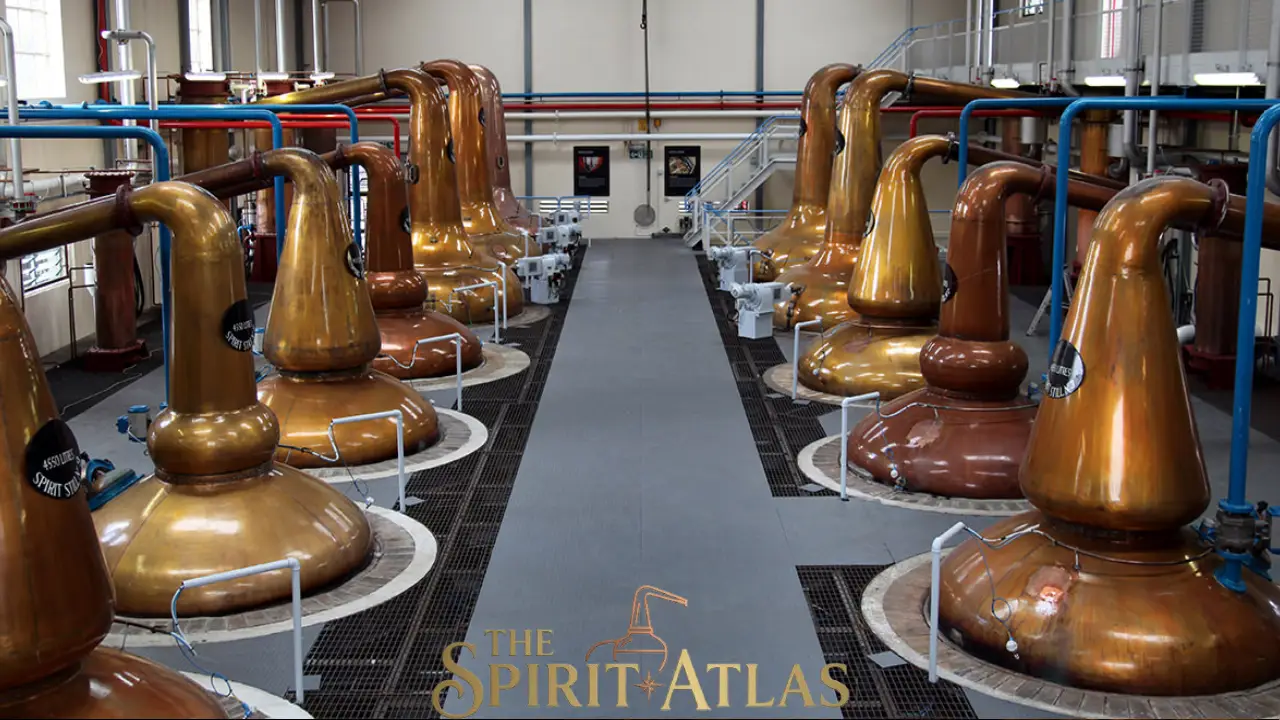
How Distillation Works in Whisky
Distillation is the step in whisky production that turns a low-alcohol beer-like liquid into a concentrated spirit with real character. By the time fermentation is complete, the wash sitting in the washback contains about 7% to 10% alcohol by volume. That is not enough concentration to create the flavour intensity whisky requires. Distillation raises it to anywhere from 60% to 70% ABV for malt whisky, or higher for grain whisky, while simultaneously stripping out unwanted compounds and shaping the flavour character that will define the spirit.
The physics behind distillation is simple: alcohol boils at a lower temperature than water (approximately 78 degrees Celsius versus 100 degrees). When you heat the wash in a still, the alcohol vapour rises first, travels up through the still's neck, and is captured and condensed back into liquid in a cooling coil or condenser. The resulting liquid is more concentrated in alcohol than what went in. The skill of distillation lies entirely in controlling this basic process to produce the specific character each distillery is trying to achieve.
Written by Shivam Sharma, founder and editor of The Spirit Atlas
Pot Stills vs Column Stills: Two Fundamentally Different Approaches
Whisky is produced using one of two still types, or sometimes a combination of both. The choice between them is one of the most consequential decisions in defining what a whisky will taste like.
Pot Stills are the traditional, batch-operated copper vessels used for making single malt whisky. They are shaped like an inverted onion or pear, with a bulbous base that holds the wash and a long neck that rises to connect to the condenser. Each batch of distillation runs separately. The still is filled, heated, run until the usable spirit is collected, emptied, and then the process starts again with the next batch. This batch nature is inherently less efficient than continuous distillation, but efficiency is not the point. Pot still distillation produces a rich, complex, heavy spirit with pronounced character from the interaction between the vapour and the copper surface of the still.
Column Stills (also called continuous stills, Coffey stills, or patent stills) work continuously rather than in batches. A constant stream of wash enters the top of a tall column while steam rises from the bottom. The alcohol vapour rises with the steam, passes through a series of perforated plates that cause it to condense and re-evaporate multiple times, and emerges from the top of the column at much higher alcohol concentration than a pot still can achieve in a single pass. Column stills can produce spirit at 90% ABV or above, compared to around 65% to 70% for malt whisky from pot stills.
For single malt whisky, pot stills are mandatory. All Indian single malts from Indri, Paul John, Amrut, and Rampur are pot still distilled. Column stills are used for grain whisky production and for the neutral spirit base in most economy IMFL whisky, where economy and consistency at high volume are the primary goals.
Why Copper Matters So Much
Pot stills are almost universally made from copper, and this is not tradition for tradition's sake. Copper plays an active chemical role in shaping the spirit's character during distillation.
During fermentation, sulphur compounds form naturally in the wash. Many of these compounds, including dimethyl sulphide and various mercaptans, smell unpleasant in concentrated form: meaty, rubbery, or rotten egg-like. If they carried through distillation unchanged into the final spirit, the whisky would be undrinkable. Copper reacts with sulphur compounds during distillation, binding them and removing them from the spirit. The more contact the vapour has with copper during its journey through the still, the more effectively these compounds are removed.
This is why still shape is so important. A tall still with a long neck provides more copper contact surface area than a short squat still. More copper contact means more sulphur removal and a lighter, cleaner, more fragrant spirit. A shorter still with a fat base and short neck provides less copper contact and produces a heavier, more oily, more robust spirit with more retained character from the raw wash. Distilleries making delicate, floral whisky use tall stills. Distilleries wanting rich, heavy whisky use short ones. Every still shape in every distillery worldwide is a deliberate decision about how much of each type of character to produce.
The Distillation Run: Foreshots, Heart, and Feints
For malt whisky, the distillation process runs at least twice. The first distillation in the wash still takes the 8% to 10% ABV wash and produces what is called low wines at around 20% to 25% ABV. These low wines go into a second still, the spirit still, for the crucial second distillation.
During the second distillation, the spirit that comes off the still is not uniform in quality. It arrives in three distinct phases, and managing the division between them is the most important skilled decision in the entire production process.
Foreshots arrive first. They contain the most volatile compounds including methanol and other toxic higher alcohols along with volatile esters that are too aggressive and chemically harsh to include in drinkable whisky. Foreshots are always discarded. The length of the foreshots cut determines how clean and light or how robust the final spirit will be.
The Heart is the central portion of the run that the distiller collects for maturation. This is the only part that becomes whisky. It contains the most desirable flavour compounds at the right alcohol concentration and in the right balance. A typical heart cut runs from around 75% ABV down to around 60% ABV before the distiller switches collection to the final phase.
Feints arrive last as the run weakens. They contain heavier, slower-to-vaporise compounds that are too heavy and fusel oil-rich to be pleasant in the final spirit. Like the foreshots, feints are redirected back to be redistilled in the next batch rather than wasted entirely.
The exact points at which the distiller switches from foreshots to heart and from heart to feints, called the cut points, are where individual distillery character is most deliberately shaped. A distillery that takes a wider heart cut gets more volume but includes slightly more of the heavier compounds from the feints end, producing a richer and more robust spirit. A narrower cut produces less volume but a cleaner, more delicate spirit. The master distiller's accumulated judgement about where to make these cuts is a key part of what makes one distillery's whisky taste different from another's even when the raw materials and cask regimes are similar.
How Distillation Shapes Flavour
The combination of still type, copper contact, still shape, speed of distillation, and cut points collectively determine what kind of spirit emerges from the distillery. These decisions cannot be undone by maturation: a heavy, sulphurous spirit from a badly managed distillation run will not become a clean, elegant whisky no matter how long it matures.
Slow distillation, where the still is run gently at lower temperatures, allows more reflux: the phenomenon where condensed vapour falls back down into the still and is redistilled, which removes heavier compounds and produces a lighter, cleaner spirit. Fast distillation with aggressive heating produces more congeners, the heavier aromatic compounds that give robust whisky its intensity and body.
Indian single malt distilleries like Paul John in Goa have made specific still shape and cut point decisions that produce their house style. Paul John Bold's peated character comes from the malting stage, but the way that peat smoke integrates with the spirit's body is shaped by how the distillation is managed. The lighter, more ethereal character of Paul John Nirvana versus the heavier, richer character of some Amrut expressions reflects different distillation approaches as much as different cask regimes.
What Happens After Distillation
When the heart cut emerges from the spirit still, it is called new make spirit. It is colourless, typically around 63% to 70% ABV, and smells intensely of grain, light fruit, and sometimes sulphur. It is not yet whisky in any legal or aesthetic sense. It becomes whisky only after maturation in oak casks, when the wood extracts and the slow chemistry of the barrel transform the raw spirit into the complex drink that eventually reaches the bottle.
The new make is diluted with water to around 63% ABV before filling into casks, which is the traditional filling strength that most distilleries have found optimal for maturation. Too high and the spirit draws aggressive tannins from the wood too quickly. Too low and the spirit lacks the concentration to extract enough of the wood's character during the early years of maturation.
The full story of what happens in the cask once distillation is complete is covered in the how oak shapes flavour guide and the angel's share guide. For the complete production sequence from grain to glass, the how whisky is made guide covers all six stages.
| Factor | Effect on Spirit | Light Style | Heavy Style |
|---|---|---|---|
| Still height | Controls copper contact and reflux | Tall neck, more copper | Short neck, less copper |
| Distillation speed | Affects reflux and congener retention | Slow, gentle heat | Fast, aggressive heat |
| Heart cut width | Volume vs character trade-off | Narrow cut, less feints | Wide cut, more feints |
| Condenser type | Affects copper contact during cooling | Shell and tube (more copper) | Worm tub (less copper) |
| Number of distillations | Concentration and refinement | Triple distilled (Irish style) | Double distilled (Scotch style) |
Frequently Asked Questions: How Distillation Works
What is distillation in whisky production?
Distillation is the process of heating the fermented wash to selectively vaporise and then condense the alcohol, concentrating it from around 8% to 10% ABV in the wash to 65% to 70% ABV in the new make spirit. It happens in copper stills and is repeated at least twice for single malt whisky. The shape of the still, the speed of distillation, and the exact cut points all determine the character of the resulting spirit.
What is the difference between a pot still and a column still?
A pot still is a traditional batch vessel made from copper that processes one charge of wash at a time and produces rich, complex spirit with pronounced character. A column still operates continuously and produces lighter, higher-strength spirit more efficiently. Single malt whisky must use pot stills. Economy IMFL whisky and grain whisky use column stills. The choice of still type is the most fundamental production decision shaping the character of the final whisky.
What is the heart cut in whisky distillation?
The heart cut is the central portion of the spirit still run that is collected for maturation and eventually becomes whisky. The first portion of the run (foreshots) and the last portion (feints) are discarded or redistilled because they contain undesirable compounds. The heart cut decision, specifically the exact points at which the distiller switches between phases, is the most skilled judgement call in whisky production and a key driver of each distillery's house character.
Why are whisky stills made from copper?
Copper reacts with sulphur compounds that form naturally during fermentation, removing them from the spirit as vapour passes through the still. Without copper, these compounds would remain in the distillate and make the whisky smell meaty, rubbery, or unpleasant. The more surface area of copper the vapour contacts during distillation, the more sulphur is removed and the lighter and cleaner the resulting spirit. This is why taller stills with longer necks produce lighter whisky than shorter ones.
How does the shape of a still affect whisky flavour?
Still shape directly controls reflux: the process by which some condensed vapour falls back into the still and is redistilled. Taller stills with long, upward-sloping necks cause more reflux, removing heavier compounds and producing lighter, more delicate spirit. Short, squat stills with downward-sloping necks produce less reflux and heavier, more robust spirit. The unique shape of every distillery's stills is a deliberate decision about the style of whisky they want to produce.
Is triple distillation better than double distillation?
Triple distillation, used in Irish whiskey production including Jameson, produces a lighter and smoother spirit by removing more compounds through the additional distillation pass. Double distillation, standard for Scotch and Indian single malt, retains more character and complexity from the wash and the fermentation. Neither is objectively better. Triple distillation produces an approachable, smooth style ideal for beginners. Double distillation preserves more of the grain and fermentation character that enthusiasts often find more interesting. The whisky for beginners guide covers why triple-distilled Irish whiskey like Jameson is often the best starting point for new drinkers.