What is Peated Whisky?
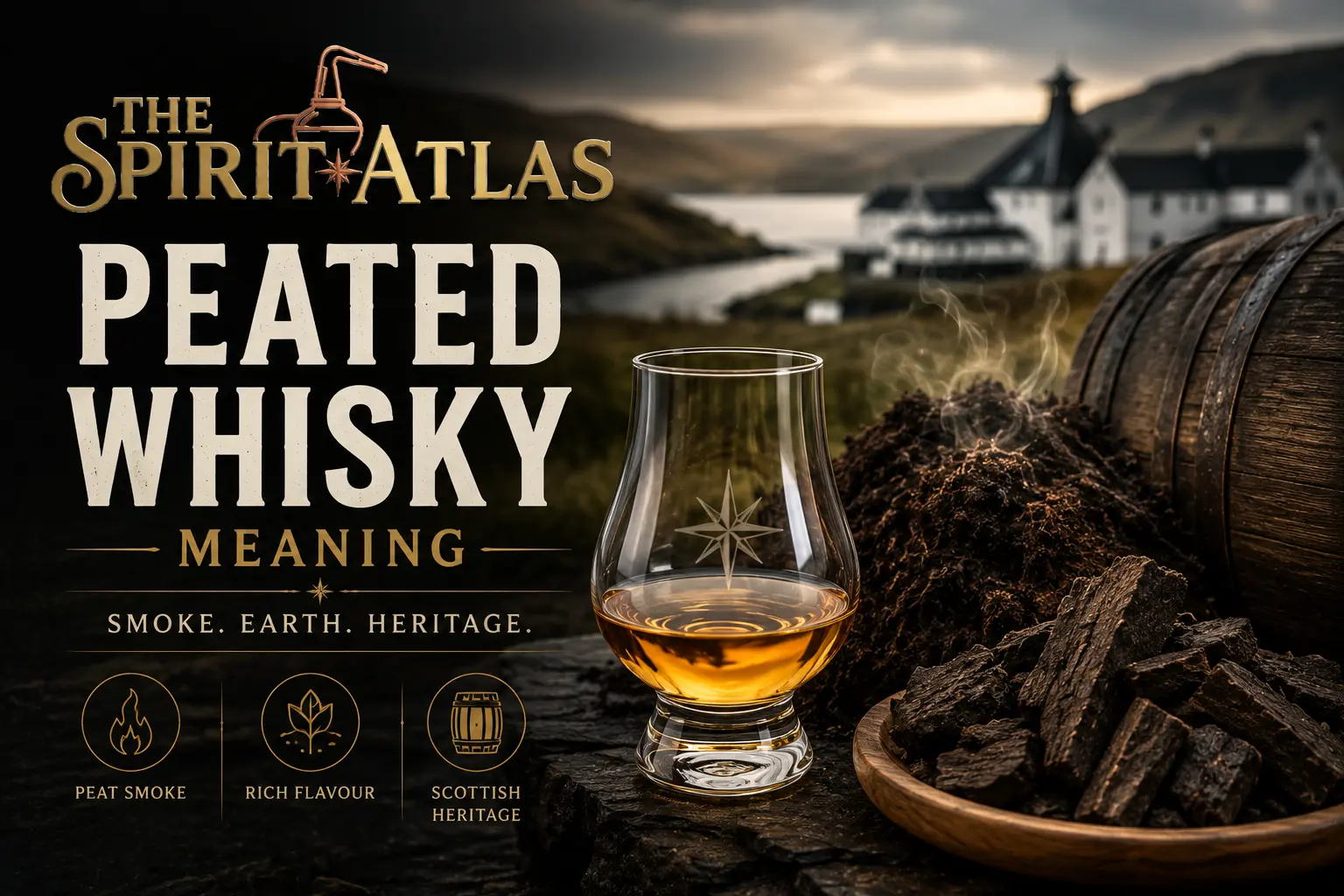
Peated whisky is whisky that gets a smoky flavour from the use of peat, a type of compressed organic matter found in bogs, as fuel during the malting stage of whisky production. When barley is dried in a kiln fuelled by burning peat, the smoke infuses the grain with aromatic compounds called phenols. These phenols survive fermentation, distillation, and maturation and ultimately give the whisky its characteristic smoky, earthy, sometimes medicinal flavour.
Not all whisky is peated. Many of the world's most famous whiskies, including most Speyside single malts like Glenfiddich and The Macallan, are completely unpeated and have no smokiness at all. Peated whisky is a specific style, not a category requirement, and the intensity of the peat character varies enormously across different expressions.
Understanding what peated whisky means helps enormously when reading bottle labels, choosing what to try next, and understanding why Indian single malts from different distilleries can taste so dramatically different from one another. It also connects directly to how whisky is made, since peat enters the production process right at the beginning during malting.
Written by Shivam Sharma, founder and editor of The Spirit Atlas
What is Peat and Where Does It Come From?
Peat is partially decomposed plant matter that has accumulated over thousands of years in waterlogged, oxygen-deprived environments called bogs. Mosses, grasses, heather, tree roots, and other vegetation fall into these bogs and decompose extremely slowly without enough oxygen to fully break down. Over centuries and millennia, this organic material compresses into dense, dark, spongy layers that can be cut into blocks and burned as fuel.
Peat from different regions contains different plant compositions, which is why peat from the Scottish island of Islay, rich in seaweed and maritime vegetation, produces a different flavour in the resulting whisky than Highland peat, which tends to be more earthy and heathery. Even within Scotland, two distilleries using peated barley from different parts of the country will produce whisky with distinct smoky characters.
Originally, all Scottish whisky was smoky because peat was simply the most available fuel for drying malted barley. It was not a stylistic choice; it was a practical reality. As coal and later electricity became available, distilleries in more accessible regions moved away from peat and discovered that unpeated barley produced lighter, more delicate spirits. The heavily peated style survived mainly on the island of Islay and in some remote Highland and island locations.
How Peat Gets Into Whisky
Peat enters the whisky at the malting stage. After barley is soaked in water and allowed to partially germinate, the germination must be stopped by heating the grain in a kiln. If the distiller wants an unpeated whisky, the kiln uses hot air or gas. If the distiller wants a peated whisky, burning peat is introduced to the kiln.
The smoke rising from the burning peat passes through the moist barley sitting on the kiln floor above. The phenolic compounds in the peat smoke, specifically guaiacol, cresols, syringol, and phenol itself, bond to the wet grain surface. The longer and more intensely the barley is exposed to the smoke, the more phenols it absorbs and the smokier the eventual whisky will taste.
Once phenol-laden barley moves through the rest of the production process, mashing, fermentation, distillation, and maturation, the phenols carry through into the final spirit. Distillation reduces the phenol level somewhat, and long cask maturation can soften the perceived smokiness over time. But the essential smoky character, set at the malting stage, persists into the bottle.
What is PPM in Whisky?
PPM stands for Phenol Parts Per Million. It measures the concentration of phenolic compounds in the malted barley after peat smoking. The higher the PPM figure, the more phenols are present and generally the smokier the final whisky will taste.
This is the most practical number to understand when comparing peated whiskies. A whisky made from barley with 2 PPM will have a barely detectable background smokiness. A whisky from 50 PPM barley will be intensely, assertively smoky.
One important nuance: PPM figures quoted on bottles refer to the phenol content of the barley, not the finished whisky. Distillation typically reduces phenol levels by 30% to 50%. A barley specification of 50 PPM might produce a final spirit closer to 25 to 35 PPM. PPM should be treated as an indicator of comparative smokiness, not a precise measure of what is in your glass.
Peated Whisky PPM Scale
| PPM Range | Peat Level | Character | Example Brands |
|---|---|---|---|
| 0 to 2 PPM | Unpeated | No smoke, clean grain and fruit | Glenfiddich, The Macallan, Indri Trini |
| 3 to 15 PPM | Lightly peated | Background earthiness, subtle smoke | Springbank (~8 PPM), Highland Park |
| 15 to 35 PPM | Medium peated | Noticeable smoke balanced with fruit and spice | Bowmore (~25 PPM), Talisker 10 |
| 35 to 55 PPM | Heavily peated | Dominant smoke, iodine, coastal notes | Laphroaig (40 to 45 PPM), Ardbeg (50 PPM) |
| 55 PPM and above | Super heavily peated | Extreme smoke, academic intensity | Octomore (100 to 300+ PPM malt spec) |
Peated Whisky Flavour: What to Expect
The classic flavour descriptors for peated whisky are smoke, earth, and in the most heavily peated Islay expressions, iodine, seaweed, and tar. But the reality of peated whisky flavour is more varied and often more interesting than just "it tastes like smoke."
The specific phenolic compounds create different flavour impressions. Guaiacol produces the classic woody, smoky note. Syringol adds a sweeter, campfire-like smoke. Cresols deliver the medicinal, antiseptic, iodine-like character that makes Laphroaig so polarising and so distinctive. The combination of these compounds, modified by fermentation character, still shape, cask type, and maturation length, creates an enormous range within the peated category.
In older peated whiskies, the smoke softens over time in the cask. A very old Ardbeg or Laphroaig will show a more integrated, mellow smokiness with leather, tobacco, and deep earth notes emerging alongside what was once a more aggressive, forward peat character.
Peated Indian Whisky: Is It Different?
Yes, genuinely different. India has a small but growing category of peated single malts, and the peat character is distinct from Scottish peated whisky because the peat and the production environment are both different.
Paul John Peated and Paul John Bold from the John Distilleries in Goa use lightly peated barley and produce a whisky where the smoke integrates with the tropical fruit character of the Indian climate maturation in a distinctly different way from Islay whisky. The result is a softer, more fruit-forward smoky expression rather than the aggressive maritime smokiness of Laphroaig. These are excellent starting points for exploring how Indian terroir interacts with peat character.
The Crazy Cock distillery takes a different approach entirely, using a Mahua cask finish that brings indigenous Indian botanical influence to the spirit rather than peat smoke. This points toward a genuinely distinct Indian whisky identity that goes beyond simply replicating Scottish peated styles.
How to Start Drinking Peated Whisky
If you have never tried peated whisky, starting with a heavily peated Islay malt like Laphroaig is like jumping into cold water. Some people love it immediately. Many find it initially overwhelming. A more gradual approach works better for most people.
Start at around 15 to 25 PPM to get the idea of what peat contributes without full intensity. Talisker 10 from Skye, Bowmore 12 from Islay, or Paul John Peated from India are good entry points. Once comfortable with that character, you can explore further toward Laphroaig and Ardbeg if you find you enjoy the smoky style.
Adding a drop of water, as covered in the how to drink whisky guide, is particularly useful with peated whisky. Water opens up the fruity and grain notes that can be initially masked by the smoke, revealing the full complexity rather than just the dominant smoky impression. Let the poured glass sit for a couple of minutes before nosing, as this allows the initial alcohol intensity to dissipate and lets the subtler smoky notes emerge more clearly.
For peated whiskies available in India with current state-wise pricing, the full Scotch whisky section and Indian single malt section at The Spirit Atlas cover every major expression.
Frequently Asked Questions About Peated Whisky
What does peated whisky mean?
Peated whisky is whisky made using barley that has been dried in a kiln fuelled by burning peat. The peat smoke infuses the barley with phenolic compounds, which carry through distillation and maturation into the final spirit, giving the whisky a smoky, earthy, or sometimes medicinal flavour. The intensity of the smokiness depends on how long and how intensely the barley was exposed to the peat smoke, measured in PPM (Phenol Parts Per Million).
What does peated whisky taste like?
Peated whisky tastes smoky, earthy, and in the most intensely peated expressions, medicinal with notes of iodine, seaweed, and sea salt. Lighter peated expressions add a background earthiness and campfire smoke without dominating the other flavours. The specific taste depends on the peat source, the PPM level, the distillery's production style, and how long the whisky has matured.
Is peated whisky stronger in alcohol?
No. Peated whisky is not stronger in alcohol than unpeated whisky. The smokiness comes from phenolic compounds, not from the alcohol content. A peated whisky at 40% ABV and an unpeated whisky at 40% ABV contain exactly the same amount of alcohol. You can read more about how whisky alcohol percentage works independently from flavour character.
What is the difference between peated and unpeated whisky?
Peated whisky is made from barley dried with burning peat during the malting stage, infusing the grain with phenolic compounds that create smoky flavours in the finished spirit. Unpeated whisky uses barley dried with hot air or gas, with no peat smoke. Unpeated whiskies show more clearly the fruit, grain, floral, and oak character of the distillery and the cask without any smoky overlay.
What is PPM in whisky?
PPM stands for Phenol Parts Per Million. It measures the concentration of phenolic compounds in the malted barley after peat smoking. Higher PPM means more phenols in the barley and generally a smokier whisky. The PPM figure quoted by distilleries refers to the barley specification before distillation, not the final spirit. Distillation reduces phenol levels by 30% to 50%, so the finished whisky PPM is lower than the malt PPM, though the number remains a reliable guide to comparative smokiness between expressions.
Is Scotch always peated?
No. Only a minority of Scotch whisky is peated. Most Speyside single malts including Glenfiddich and Balvenie are completely unpeated. Islay is the region most associated with peated Scotch, but even Islay has unpeated distilleries. The peated style is a choice made by each individual distillery, not a requirement for any Scotch whisky category.
Can Indian single malt be peated?
Yes. Some Indian single malts use peated barley. Paul John Peated and Paul John Bold are the most widely available peated Indian single malts. The peat character in these expressions is typically softer and more integrated with tropical fruit notes than the aggressive maritime smokiness of Islay whisky, reflecting the different character of the peat and the influence of India's warmer, faster-maturing climate on the spirit.