What is Blended Whisky?
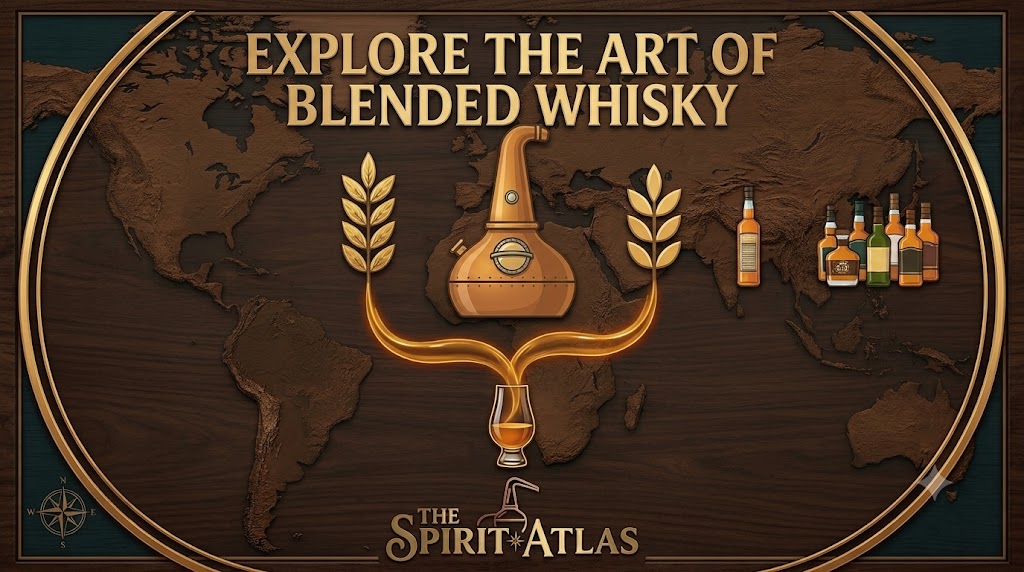
Blended whisky is whisky made by combining two or more different whiskies from multiple distilleries. In the most common version, blended Scotch whisky, a master blender combines single malt whisky (made from malted barley) with grain whisky (made from other grains like wheat or corn) to create the final product. The result is a consistent, balanced spirit designed to taste the same every time someone opens a bottle.
Blended whisky is the dominant style of whisky in the world. Around 90% of all Scotch whisky sold globally is blended, not single malt. Johnnie Walker, Chivas Regal, Ballantine's, Dewar's, and Teacher's are all blended whiskies. In India, the same pattern holds. Royal Stag, Imperial Blue, Seagram's 100 Pipers, and Blenders Pride are all blended whiskies that fall under the broader IMFL classification. They account for the vast majority of packaged spirits sold in this country.
The word "blended" sometimes gets a bad reputation among whisky enthusiasts who treat single malt whisky as inherently superior. That reputation is undeserved and largely a product of marketing, not liquid quality.
Written by Shivam Sharma, founder and editor of The Spirit Atlas
How is Blended Whisky Made?
Making a good blended whisky is genuinely difficult. It requires access to whisky from multiple distilleries, a master blender with an exceptionally calibrated palate, and the ability to maintain a consistent flavour profile across millions of bottles and multiple years of production.
Distillation of components - Malt whisky is made at traditional pot still distilleries using 100% malted barley. Grain whisky is produced at column still distilleries using wheat, corn, or other grains. A major blending operation like Diageo or Pernod Ricard has access to whisky from dozens of different malt distilleries and several grain distilleries. For a deeper understanding of how each type of spirit is produced, the how whisky is made guide covers both pot still and column still distillation in detail.
Maturation - Each component matures separately in oak casks. The master blender tastes samples from different casks over years, tracking how each whisky develops before committing to a blend.
Blending - The master blender selects specific whiskies and combines them in calculated proportions. A standard blended Scotch typically contains around 30% to 40% malt whisky and 60% to 70% grain whisky, though premium expressions use higher malt proportions.
Marrying - The blended whiskies rest together in casks for several weeks or months. This marrying period allows the individual components to integrate and the flavours to harmonise.
Bottling - The married whisky is diluted with water to bottling strength, usually 40% to 43% ABV, and bottled. The age statement on a blended whisky refers to the youngest whisky in the blend.
Types of Blended Whisky
Blended Scotch Whisky - Combines single malt Scotch and grain Scotch from multiple distilleries. Johnnie Walker and Chivas Regal are the defining examples. Check the Scotch whisky section for current India pricing across all major blended Scotch brands.
Blended Malt Whisky - Combines single malt whiskies from two or more distilleries, with no grain whisky added. Monkey Shoulder is the best-known example. Richer and more complex than standard blended Scotch because there is no grain whisky in the mix.
IMFL Blended Whisky - Indian blended whiskies follow a different model. Many economy and mid-range IMFL whiskies are blended from neutral spirit derived from molasses, with a small proportion of actual grain or malt whisky. Premium IMFL blends like Blenders Pride use a higher proportion of quality grain whisky and some imported Scotch to achieve a more authentic profile. The full range is covered in the IMFL whisky guide.
Blended Whisky vs Single Malt: Which is Better?
Neither is objectively better. Single malt has a story to tell. It comes from one place, reflects the character of one distillery, and offers a specific, identifiable personality. Blended whisky has a different kind of value. It is engineered for consistency, designed to be enjoyable across a broad range of occasions, and often more versatile in cocktails and highballs.
A well-crafted 12-year-old blended Scotch from a great blender often outperforms a mediocre single malt. Most people who stick exclusively to single malt out of principle are missing out on genuinely impressive blended expressions.
Best Blended Whiskies Available in India (2026)
| Tier | Brand | Type | Approx. Delhi Price |
|---|---|---|---|
| Value | Royal Stag, Imperial Blue | IMFL Blend | Rs 350 to Rs 700 |
| Mid-range | Blenders Pride, 100 Pipers | IMFL Blend | Rs 900 to Rs 1,800 |
| Premium | Chivas Regal 12, JW Black | Blended Scotch | Rs 2,500 to Rs 4,000 |
| Super Premium | Chivas Regal 18, JW Gold | Blended Scotch | Rs 5,000 to Rs 9,000 |
Browse the complete whisky guide for state-wise prices across all blended and single malt expressions available in India.
Frequently Asked Questions About Blended Whisky
What is blended whisky made from?
Blended whisky is made by combining malt whisky and grain whisky from multiple distilleries. The malt whisky component uses 100% malted barley distilled in pot stills. The grain whisky component uses other grains like wheat or corn distilled in continuous column stills. Both are matured separately in oak casks before the master blender combines them.
Is blended whisky inferior to single malt?
No. Blended whisky has a reputation for being a lower quality option but this is largely a marketing myth. At the premium level, blended whiskies like Chivas Regal 18 and Johnnie Walker Blue Label are deeply complex, well-crafted expressions that rival many single malts in quality. The category label does not determine quality; production, maturation, and blending skill do.
What is the difference between blended whisky and single malt?
Single malt whisky comes from one distillery and uses only malted barley. Blended whisky combines malt and grain whiskies from multiple distilleries. Single malt tends to express the distinct character of one production source. Blended whisky is designed for consistency, balance, and broader palatability across a large audience.
Is Royal Stag a blended whisky?
Yes. Royal Stag is a blended IMFL whisky made by Pernod Ricard India. It combines neutral spirit, Indian grain spirit, and a proportion of imported Scotch whisky in the blend. The same applies to Imperial Blue, McDowell's No.1, and most other major Indian whisky brands at the economy and mid-range tiers.
What does the age statement on blended whisky mean?
The age statement on a blended whisky refers to the youngest whisky in the blend. A bottle of Chivas Regal 12 Year means every component whisky in the blend has been matured for at least 12 years, though many components will be older. The master blender selects whiskies across different ages to build the desired flavour profile.
What is blended malt whisky?
Blended malt whisky combines single malt whiskies from two or more distilleries, with no grain whisky in the mix. Monkey Shoulder is the most well-known example. Because it uses only malt whisky across multiple distilleries, blended malts tend to be richer and more complex than standard blended Scotch, which includes grain whisky as the larger component.
Why is blended whisky cheaper than single malt?
Blended whisky includes grain whisky, which can be produced much more efficiently in continuous column stills at a much lower cost per litre than pot still malt whisky. This grain whisky component, which often makes up 60% to 70% of the blend, significantly reduces production costs. Single malt must be made entirely from malted barley in small batch pot stills, which is more expensive and time-consuming at every stage of production.