

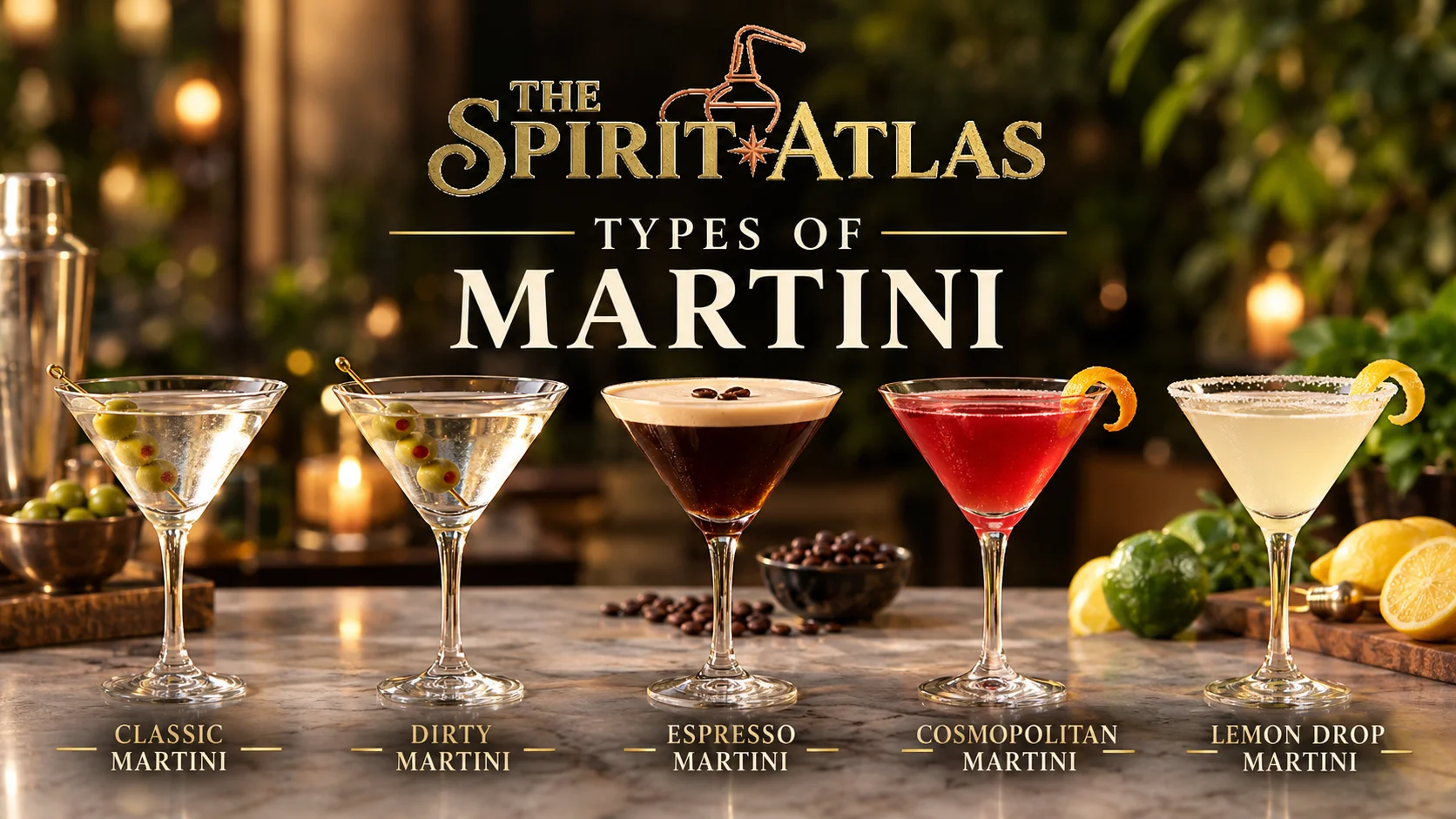
What Is a Martini
A martini is a cocktail of gin and dry vermouth, stirred with ice, strained into a chilled stemmed glass and finished with an olive or a strip of lemon peel. That is the classic definition. Every other type of martini changes one thing: the amount of vermouth, the spirit, the garnish, or what gets added to the glass.
There are two families. The first is the true martini and its close relatives, all built on gin or vodka with vermouth. The second is the group of modern drinks that took the name from the V-shaped glass, such as the Espresso Martini. They are good drinks, but they have no gin and no vermouth. This guide covers both, so you know what you are ordering.
Types of Martini at a Glance
| Type | Base spirit | What makes it different | Garnish |
|---|---|---|---|
| Dry Martini | Gin | 5 or 6 parts gin to 1 part dry vermouth | Olive or lemon twist |
| Wet Martini | Gin | More vermouth, about 3 to 1 | Lemon twist |
| 50-50 Martini | Gin | Equal parts gin and dry vermouth | Lemon twist |
| Extra Dry Martini | Gin or vodka | Only a rinse of vermouth, or none | Olive or lemon twist |
| Dirty Martini | Gin or vodka | Olive brine added | Olives |
| Vodka Martini | Vodka | Vodka in place of gin | Olive or lemon twist |
| Gibson | Gin | Same drink, different garnish | Cocktail onion |
| Perfect Martini | Gin | Equal parts dry and sweet vermouth | Lemon twist |
| Vesper | Gin and vodka | Lillet Blanc in place of vermouth, shaken | Lemon peel |
Classic Gin and Vermouth Martinis
Dry Martini
The standard order. Our Dry Martini recipe uses 60ml (2 oz) of London dry gin and 10ml of dry vermouth, stirred for 30 seconds and strained into a glass straight from the freezer. It is crisp, cold and strong, at about 30% ABV. "Dry" refers to dry vermouth and, in practice, to using less of it.
Wet Martini
A wet martini uses more vermouth, around 3 parts gin to 1 part vermouth. It is softer, more herbal and a little lower in alcohol. This is closer to how the drink was made in the early 1900s, before tastes moved towards very dry versions.
50-50 Martini
Equal parts gin and dry vermouth, usually with a dash of orange bitters. It is the easiest martini to drink and a good place to start if a dry one tastes like cold gin to you. Because vermouth makes up half the glass, use a fresh bottle.
Extra Dry Martini
Almost all spirit. The bartender swirls a little vermouth around the glass and tips it out, or leaves it out completely. At that point it is chilled gin or vodka with a garnish, which is exactly what some people want.
Dirty Martini
A dry martini with 10 to 15ml of olive brine added. The brine makes the drink salty, savory and slightly cloudy. Ask for it extra dirty or filthy if you want more. It works with gin or vodka, and it has become one of the most ordered variations in American bars.
Vodka Martini
Vodka replaces the gin. Without juniper and botanicals the drink is cleaner and more neutral, so texture and temperature matter more than flavor. Older bar books list it as a Kangaroo. Always say "vodka martini" when you order, because a plain "martini" traditionally means gin.
Gibson
A dry gin martini garnished with a pickled cocktail onion in place of the olive. The onion adds a faint sweet and sour note. Nothing else changes.
Perfect Martini
"Perfect" is bar language for equal parts dry and sweet vermouth. A typical build is 60ml gin, 10ml dry vermouth and 10ml sweet vermouth. It is rounder and slightly sweeter, and it sits halfway between a martini and a Manhattan in style.
Vesper
The James Bond martini. Ian Fleming put the recipe in Casino Royale in 1953. It calls for gin, vodka and Kina Lillet in a 6:2:1 ratio, shaken hard and garnished with lemon peel. Kina Lillet is no longer made, so bars use Lillet Blanc. A home version is 45ml gin, 15ml vodka and 7.5ml Lillet Blanc.
Modern Martinis Without Vermouth
From the 1980s onwards, bartenders began calling almost any drink served in a V-shaped glass a martini. These are the ones worth knowing.
- Espresso Martini: vodka, fresh espresso and coffee liqueur, shaken hard for a foam top. Created in London in 1983. About 15% ABV.
- Passion Fruit Martini: vanilla vodka, passion fruit and lime with a shot of prosecco on the side. Better known as the Pornstar Martini and a bestseller in the United Kingdom.
- Lemon Drop Martini: vodka, triple sec, lemon juice and simple syrup in a sugar-rimmed glass.
- Lychee Martini: vodka, lychee liqueur and lychee juice. A fixture in Asian restaurants and bars.
- French Martini: vodka, raspberry liqueur and pineapple juice.
- Appletini: vodka with sour apple liqueur.
The Cosmopolitan belongs to the same family, even though it never took the martini name. All of these are sweeter, fruitier and far lower in alcohol than a true martini.
How to Order a Martini
A bartender needs four answers from you. Give them in this order and you will get the drink you want.
- Gin or vodka. Name a brand if you care which one.
- How dry. Wet, dry or extra dry tells them how much vermouth to use.
- Any additions. Dirty means olive brine.
- The garnish. "With a twist" is lemon peel. "With olives" is the alternative. An onion makes it a Gibson.
A full order sounds like this: "Gin martini, dry, with a twist." Martinis are served up, meaning chilled and strained with no ice, unless you ask for one on the rocks.
Shaken or Stirred
Stir any martini that contains only spirits and vermouth. Stirring chills and dilutes the drink while keeping it clear and silky. Shaking makes it colder but cloudy, and it adds small chips of ice that thin the texture. Bond's shaken order is the exception, not the rule.
The modern fruit and coffee martinis are the opposite. Anything with juice, espresso or liqueur needs a hard shake to mix properly and to build foam.
Which Gin, Vodka and Vermouth to Use
For gin, pick a juniper-led London dry. Tanqueray is the benchmark, Bombay Sapphire is lighter and more floral, and Gordon's is the budget choice and the gin Fleming named in the Vesper. For a vodka martini, texture matters most, so a smooth vodka such as Grey Goose or Absolut is worth the money.
Vermouth is where most home martinis go wrong. It is a wine, and an open bottle left in a cupboard turns flat and sour within weeks. Buy a small bottle of dry vermouth, keep it in the fridge and replace it after about a month. You can find more options in our gin cocktail recipes and vodka cocktail recipes.
Frequently Asked Questions
What are the main types of martini?
The main types are the Dry Martini, Wet Martini, 50-50, Dirty Martini, Vodka Martini, Gibson, Perfect Martini and Vesper. All of them are made with gin or vodka and vermouth or another aromatized wine. Drinks such as the Espresso Martini and Lychee Martini share the glass and the name but are different cocktails.
What is the difference between a dry martini and a wet martini?
The amount of vermouth. A dry martini has very little, usually 5 or 6 parts gin to 1 part dry vermouth. A wet martini has more, around 3 parts gin to 1 part vermouth, so it tastes softer and more herbal.
What makes a martini dirty?
Olive brine. A Dirty Martini adds 10 to 15ml of the salty liquid from a jar of olives, which makes the drink savory and slightly cloudy. Extra dirty or filthy means more brine.
Is a martini made with gin or vodka?
The original is made with gin. A Vodka Martini swaps in vodka for a cleaner, more neutral drink. If you ask for a martini without naming a spirit, most bartenders will ask which one you want.
Is an espresso martini a real martini?
Not in the classic sense. It has no gin and no vermouth. It is a vodka and coffee cocktail that took the name from the V-shaped glass it was first served in.
How strong is a martini?
A Dry Martini made with 60ml of gin and 10ml of vermouth is about 30% ABV once stirred with ice. That is roughly 1.6 US standard drinks, 2.2 Australian standard drinks or 2.8 UK units in one glass, which makes it one of the strongest classic cocktails.
What does it mean to order a martini up or with a twist?
Up means chilled with ice and then strained into a stemmed glass with no ice. With a twist means garnished with a strip of lemon peel in place of an olive.
The Short Version
Every true martini is gin or vodka with vermouth, and the name tells you what changed. Dry means less vermouth, wet means more, dirty means olive brine, a Gibson swaps the olive for an onion, and a Vesper adds vodka and Lillet. Espresso, lychee and passion fruit martinis are separate cocktails that borrowed the glass. Start with a 50-50 or a wet martini if you are new to them, and move towards dry as you get used to the taste.