What is the Alcohol Percentage of Whisky?
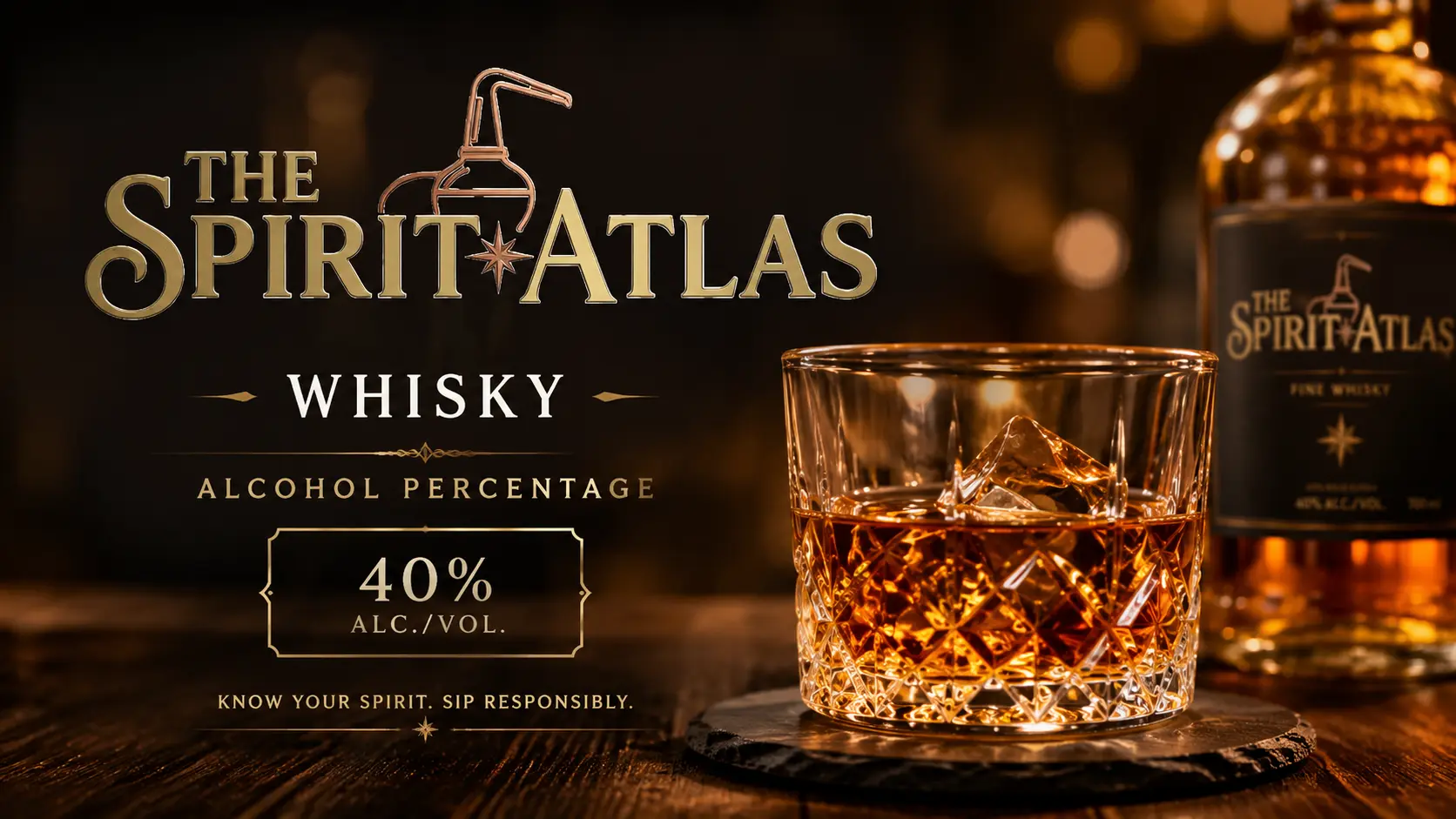
Whisky alcohol percentage, measured as ABV (Alcohol By Volume), typically ranges from 40% to 65% depending on the style and expression. Standard commercial whiskies are usually bottled at 40% to 43% ABV. Premium expressions often sit at 46% ABV. Cask strength whisky, bottled directly from the barrel with minimal or no dilution, can reach anywhere from 55% to 65% or higher.
In India, most IMFL whisky is bottled at 42.8% ABV, which is the standard strength set by Indian excise regulations. You will see this figure on most Indian whisky labels, from Royal Stag and Imperial Blue at the economy end to Indian single malts like Indri and Paul John at the premium tier, where some expressions are bottled at 46%.
Written by Shivam Sharma, founder and editor of The Spirit Atlas
What Does ABV Mean on a Whisky Bottle?
ABV stands for Alcohol By Volume. It tells you what percentage of the liquid in your glass is pure ethanol. A bottle of whisky at 40% ABV means 40% of the liquid is alcohol and 60% is water and other flavour compounds.
The percentage is measured at 20 degrees Celsius, which is the internationally recognised standard temperature for alcohol measurement. This standardisation allows you to compare alcohol content across different bottles and different countries meaningfully.
ABV is the measurement used throughout most of the world including India, the European Union, and Scotland. The United States uses a different system called "proof," which is simply twice the ABV. A 40% ABV whisky is 80 proof in the US system. A 50% ABV cask strength expression is 100 proof. For understanding whisky calories, the ABV is the single most important factor since alcohol itself contains about 7 calories per gram.
Why is Most Whisky Bottled at 40%?
40% ABV is the legal minimum for whisky in most countries including India, Scotland, and the European Union. Below 40%, the spirit cannot legally be sold as whisky.
The 40% minimum was not chosen arbitrarily. Most whisky flavour compounds, the esters, aldehydes, and aromatic molecules that give whisky its complexity, are expressed most effectively when the liquid sits between 40% and 46% ABV. Too low and the spirit tastes watery. Too high and the alcohol overwhelms the more delicate aromas and flavours.
Many distillers consider 43% to 46% ABV to be the sweet spot for bottling. At 46% and above, natural colour retention and non-chill filtration also become standard practice, meaning the fatty acids that cause cloudiness are kept in suspension and the whisky retains more of its natural texture and flavour.
Whisky Alcohol Percentage by Category
| Whisky Category | Typical ABV | Examples |
|---|---|---|
| Economy IMFL whisky (India) | 42.8% | Royal Stag, Imperial Blue, Officer's Choice |
| Standard blended Scotch | 40% to 43% | Johnnie Walker Red, Chivas Regal 12 |
| Premium Scotch blended | 43% | Chivas Regal 18, JW Black Label |
| Premium single malt | 43% to 46% | Glenfiddich 12, The Macallan 12 |
| Indian single malt | 42.8% to 50% | Indri (46%), Paul John Brilliance (46%) |
| Cask strength expressions | 52% to 65%+ | Amrut Cask Strength, Indri Collector's Edition |
How Whisky Alcohol Percentage Affects the Taste
ABV changes the way whisky feels and tastes in meaningful ways. This is one of the most practical things to understand if you want to get more from each glass.
At lower ABV (40% to 43%), the alcohol is less assertive on the nose and the palate. These expressions tend to feel lighter and are easier to drink neat. At 46%, many enthusiasts notice a richer mouthfeel and more pronounced flavour delivery. This is where most experienced whisky drinkers prefer to sip neat.
At cask strength (55% to 65%), the alcohol heat is noticeable on the nose and palate. Adding a few drops of still water opens up the aromas dramatically. For guidance on getting the best from your glass at different ABV levels, the how to drink whisky guide covers the water and ice question in detail.
What is Cask Strength Whisky?
Cask strength whisky is bottled directly from the cask at whatever alcohol percentage the maturation produced, without adding water to reduce the strength. Depending on maturation length and conditions, this ranges from around 52% ABV to over 65% ABV.
Cask strength whisky is not automatically better than standard-strength expressions. What it offers is a more concentrated version that gives the drinker full control over dilution. Many enthusiasts add their own water drop by drop to find the point at which the whisky expresses itself best. Understanding how whisky is made and what the distillation and maturation process does to alcohol levels helps explain why cask strength varies so much between expressions.
Whisky ABV vs Beer and Wine
Standard beer in India typically sits at 5% to 8% ABV. Wine is usually 12% to 15%. Most whisky is 40% to 46% ABV, making it roughly five to ten times stronger than beer by volume. This is why the standard whisky serving size is 30ml to 60ml versus 330ml for beer. In terms of actual alcohol consumed, a standard peg of whisky and a bottle of beer are roughly similar, though the concentration means the alcohol is absorbed differently in the body.
For the complete picture on how alcohol percentage translates into calorie content per serving, the whisky calories guide covers the full breakdown.
Frequently Asked Questions About Whisky Alcohol Percentage
What is the normal alcohol percentage in whisky?
Most commercial whisky is bottled at 40% to 46% ABV (Alcohol By Volume). In India, the standard for IMFL whisky is 42.8% ABV. Premium single malts are commonly bottled at 46%. Cask strength whisky ranges from 52% to over 65% ABV depending on the expression.
What does ABV mean on a whisky bottle?
ABV stands for Alcohol By Volume. It tells you what percentage of the liquid in the bottle is pure alcohol. A 40% ABV whisky means 40% of the liquid is ethanol and the remaining 60% is water and other compounds. This is the standard measurement used on all spirit bottles globally.
Is higher ABV whisky stronger tasting?
Generally yes, but not always in the way people expect. Higher ABV whisky can feel more intense and warming on the palate, and the alcohol heat is more noticeable. But adding a small amount of water to a high ABV whisky often reveals more flavour complexity, not less, because water helps volatile aromatic compounds reach the nose more effectively.
What is the alcohol percentage of Indian whisky?
Indian IMFL whisky is standardised at 42.8% ABV by excise regulation. This applies to economy and mid-range brands like Royal Stag, McDowell's No.1, and Blenders Pride. Indian single malts like Indri are bottled at 46%, while some premium and cask strength expressions sit at 50% to 58% ABV.
What is the difference between ABV and proof?
ABV (Alcohol By Volume) is the percentage used globally. Proof is an American measurement that equals twice the ABV. A 40% ABV whisky is 80 proof. A 50% ABV cask strength whisky is 100 proof. When you see proof on a bottle, dividing by two gives you the ABV equivalent.
Does a higher ABV whisky have more calories?
Yes. Alcohol contains around 7 calories per gram. Higher ABV means more alcohol per serving, which means more calories. For the full picture on whisky and calorie content, the whisky calories guide covers this in detail including a comparison across different pour sizes and ABV levels.
What ABV should I look for when buying whisky?
For everyday sipping, 43% to 46% ABV is the sweet spot recommended by most experienced whisky drinkers. At 46%, you get non-chill filtration and natural colour in most expressions, which preserves more texture and flavour. For cocktails and highballs, standard 40% to 43% expressions work perfectly and cost less. For exploring the full intensity of a whisky's character, look for cask strength expressions and dilute to taste with a few drops of water.