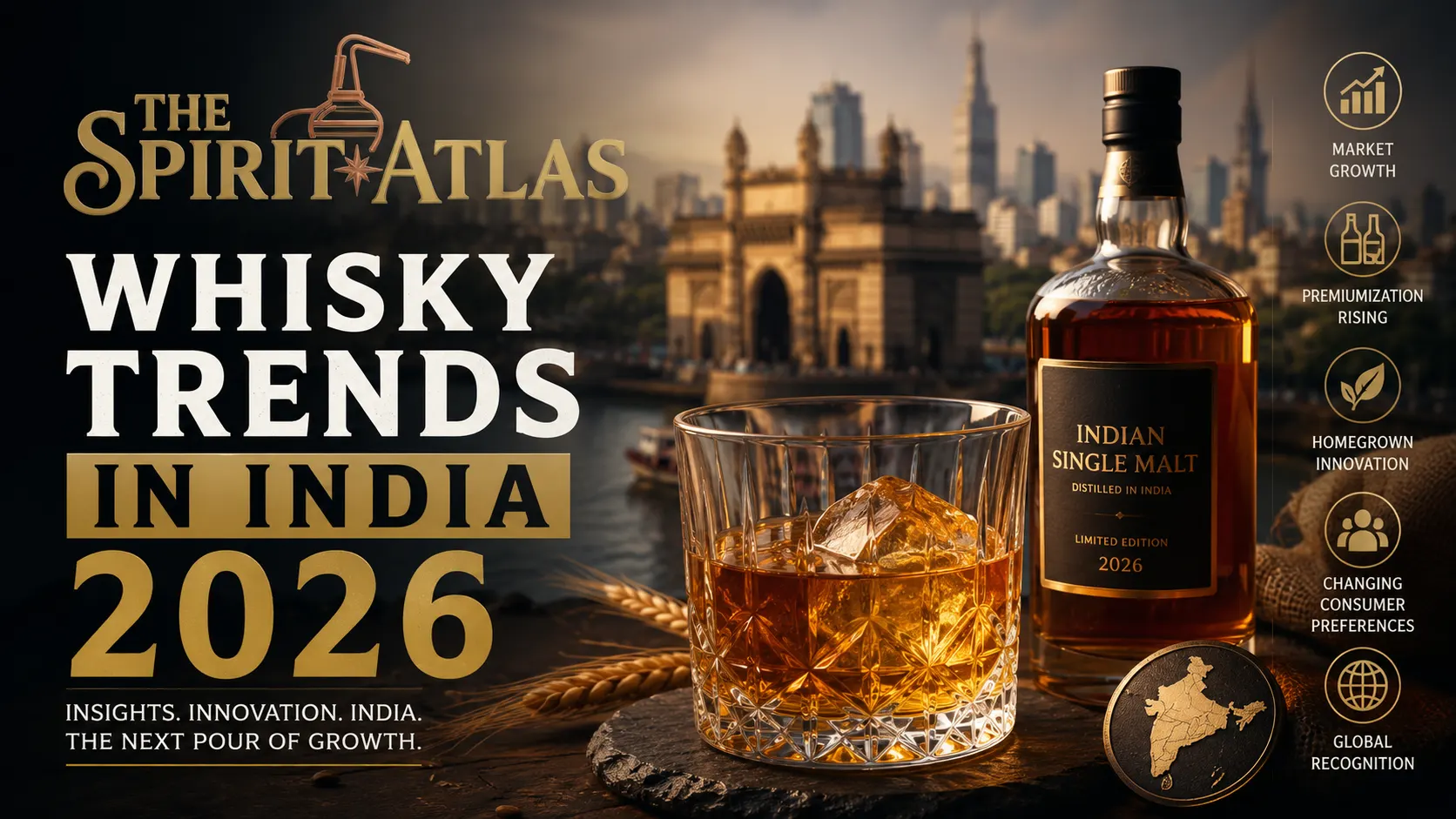
Whisky Trends in India 2026: The Big Picture
India is the world's second-largest whisky consumer by volume and is also the most dynamic whisky market in the world right now. Domestic consumption reached 307 million litres in 2024, and the market is projected to grow at 7.6% annually through to 2035, reaching 582 million cases by that point. Behind those numbers, the nature of what Indian consumers are buying is shifting faster than the headline volume figures suggest.
2026 is not a year of slow incremental change. Mass market brands are launching peated expressions. Entirely new premium single malt labels are appearing from distilleries in Jammu, Goa, Rajasthan, and Haryana. Consumers who spent Rs 400 on a 750ml bottle five years ago are now spending Rs 2,500 on something better. And Indian whisky is winning gold medals at every major international competition. Here is what is actually driving these shifts and what comes next.
Written by Shivam Sharma, founder and editor of The Spirit Atlas
Trend 1: Premiumisation is Real and Accelerating
The most significant structural shift in India's whisky market is premiumisation: consumers moving from cheaper bottles to more expensive ones as incomes rise and aspirations change. India's whisky market value is expected to reach $4.9 billion by 2034, growing at a compound rate of 7.14% annually. Volume is growing, but value is growing faster, which is the signature of a premiumising market.
Research across the Indian alcohol industry consistently shows the mid-range segment (roughly Rs 800 to Rs 2,500 per bottle) growing the fastest. The economy tier, still enormous by volume, is seeing slower percentage growth. The super-premium tier above Rs 4,000 is growing from a smaller base but at the highest rate of all. This pattern is playing out across all major cities and expanding into tier-2 cities as purchasing power spreads geographically.
What this means practically: the Rs 400 whisky and the Rs 4,000 whisky are both growing, but the money in Indian whisky is increasingly moving toward the upper end. Brands that do not have a credible premium offering are becoming structurally vulnerable as their core consumers trade up.
Trend 2: Indian Single Malts Have Gone from Niche to Mainstream
Five years ago, Indian single malt was something enthusiasts discussed and most mainstream drinkers had never tried. In 2026, that has changed. Indri Trini is now stocked in premium supermarkets and gifted at corporate events. Paul John Brilliance is on the menus of hotel bars that previously only stocked imported Scotch. Amrut Fusion is a recognised name even among drinkers who could not name many other single malts.
The international recognition has been the key accelerant. When Indian whiskies win gold medals at IWSC, the World Whiskies Awards, and the San Francisco World Spirits Competition, it creates social proof that makes the Indian consumer more confident about buying them. A bottle of Indri that costs Rs 3,500 is easier to justify when you can point to its international award record than when it was just another local product asking a premium price.
The growth in Indian single malt has also sparked a wave of new distilleries. GianChand from Jammu, Godawan from Rajasthan, Longitude 77 from Diageo India, and TRIKAL from Radico Khaitan have all appeared or expanded significantly, all covered in the best new whisky launches 2026 guide in the last two to three years. Each represents a different regional terroir and production philosophy, meaning the Indian single malt category is becoming meaningfully diverse rather than just a cluster of similar expressions.
Trend 3: Mass Market Brands Are Experimenting with Flavour
The most telling trend for where the broader market is headed is what the mass-market brands are doing. Royal Stag, which sells 31 million cases a year, launched a Double Dark Peaty Whisky variant in 2026. This is not a product aimed at whisky enthusiasts. It is aimed at the mainstream drinker who has heard about peated whisky, is curious about smoke, but does not want to spend Rs 3,000 finding out if they like it.
When brands at this volume start experimenting with flavour profiles borrowed from the premium segment, it signals that consumer education is genuinely filtering down through the market. People are reading about whisky, watching YouTube reviews, and arriving at wine shops with more specific requests than they had five years ago. The mass market brands are responding to that reality.
Blenders Pride's launch of the Four Elements expression and Iconiq White's continued rapid growth, detailed in the top whisky brands in India 2026 guide (111% volume growth in 2025, reaching 9.5 million cases) both reflect the same dynamic: even within the Rs 600 to Rs 1,500 price range, consumers are looking for something more interesting than the standard IMFL blend they grew up with.
Trend 4: Women and Younger Drinkers Are Changing the Market
India's whisky market has historically been heavily male-dominated. That is changing. The growing acceptance of women drinking alcohol, particularly in urban areas, is a structural market shift that industry reports increasingly flag as significant. This demographic change is influencing product development, bar programming, and marketing in ways that are just beginning to appear in the mainstream market.
Younger urban consumers are also approaching whisky differently from previous generations. They are more likely to have formed opinions about whisky from online content, international travel, and craft spirits bars before ever buying a full bottle. This makes them more open to Indian single malts, more interested in the story behind a bottle, and less loyal to the brands their parents drank. The cocktail culture growth, where whisky is being used in ways beyond the standard peg and soda format, is largely driven by this younger demographic.
Trend 5: The International Recognition Flywheel
Indian whisky has now accumulated enough international award wins across enough different competitions that the recognition is self-reinforcing. Each new award win creates media coverage, which creates consumer awareness, which creates retail demand, which creates export opportunities, which brings more international attention and more award entries.
In 2026 alone, Indian whiskies collected major wins at the World Whiskies Awards, the London Spirits Competition, and the San Francisco World Spirits Competition. GianChand won Double Gold at SFWSC. Paul John Port Select Cask won Best Indian Single Malt at the WWA. Indri Agneya took Gold at the WWA. The full picture of this year's wins is covered in the Indian whisky awards 2026 roundup.
The practical result for Indian consumers is that the conversation about Indian single malt has shifted from "is it good enough?" to "which expression should I buy next?" That is a fundamental change in the market's psychology, and it happened faster than most industry observers predicted even three years ago.
Trend 6: State-Wise Price Volatility Remains a Challenge
One thing that has not improved in 2026 is the complexity of state-wise pricing and distribution for whisky in India. The whisky price hike story of 2026 shows that states continue to use excise duty as a revenue tool with little coordination or consistency. Andhra Pradesh implemented a Rs 10 per bottle increase in January 2026. Maharashtra moved excise duty from three times to 4.5 times manufacturing cost. These decisions happen without warning and create significant price disparities between neighbouring states. If you are shopping on a budget, the best budget whisky in India 2026 guide covers which IMFL brands offer the best value despite these price fluctuations.
For premium Indian single malt specifically, these price differences matter more than they do for economy IMFL because the absolute rupee difference between states is proportionally larger. A Rs 200 difference on a Rs 500 bottle is annoying. A Rs 800 difference on a Rs 3,500 bottle is a significant purchasing decision.
| Trend | Direction | Key Evidence in 2026 |
|---|---|---|
| Premiumisation | Accelerating | Market value CAGR exceeding volume CAGR |
| Indian Single Malt Growth | Strong | Multiple gold medals at international competitions |
| Mass Market Flavour Innovation | New and growing | Royal Stag Peaty, Blenders Pride Four Elements |
| New Consumer Demographics | Expanding | Urban women, younger buyers entering the market |
| International Awards Momentum | Strong | WWA, LSC, SFWSC 2026 all won by Indian brands |
| State Price Volatility | Ongoing challenge | Multiple state excise hikes in 2026 |
Frequently Asked Questions About Whisky Trends in India 2026
What is the biggest whisky trend in India in 2026?
Premiumisation is the biggest structural trend: Indian consumers across income segments are spending more per bottle than they were three years ago. Within that, the rise of Indian single malt from niche product to mainstream premium category is the most visible specific trend. Brands like Indri, Paul John, and Amrut have moved from specialist shelves to hotel bar menus and corporate gift lists.
Is Indian whisky growing in popularity internationally?
Yes, significantly. Indian single malts are winning gold medals at every major international competition in 2026. Export volumes are growing, and international distribution for brands like Indri and Paul John has expanded into the UK, US, Europe, and UAE. The Indian single malt category is now considered a serious competitor to Scotch and Japanese whisky at the premium end of the global market.
What is the fastest growing whisky brand in India in 2026?
Iconiq White from Allied Blenders and Distillers grew 111% in 2025 to reach 9.5 million cases and hit 10 million cases in March 2026, making it one of the fastest growing spirits brands globally by volume. In the premium segment, new Indian single malt expressions from Indri and GianChand are showing the strongest growth momentum.
Is the Indian whisky market bigger than Scotch?
By volume, yes. India is the world's largest whisky consuming nation, and Indian brands make up eight of the top 20 best-selling whiskies globally. By value, Scotch remains the larger global market because Indian whisky is predominantly consumed in the lower price tiers. However, as premiumisation accelerates, India's contribution to global whisky value is growing rapidly.
Why are Indian whisky prices different in every state?
Alcohol regulation in India is a state subject under the Constitution. Each state sets its own excise duty and Maximum Retail Price independently, which is why the same bottle can cost Rs 300 to Rs 500 more in one state than in another. The full picture of how excise changes affect prices in 2026 is covered in the whisky price hike India 2026 guide.