What Does IMFL Mean? The Full Form and Simple Explanation
If you have ever bought a bottle of whisky in India, looked at a liquor licence, or read a state excise notification, you have seen the term IMFL. It shows up everywhere in Indian alcohol regulation, yet almost nobody outside the industry knows what it actually means — and the people who think they know usually get it half wrong.
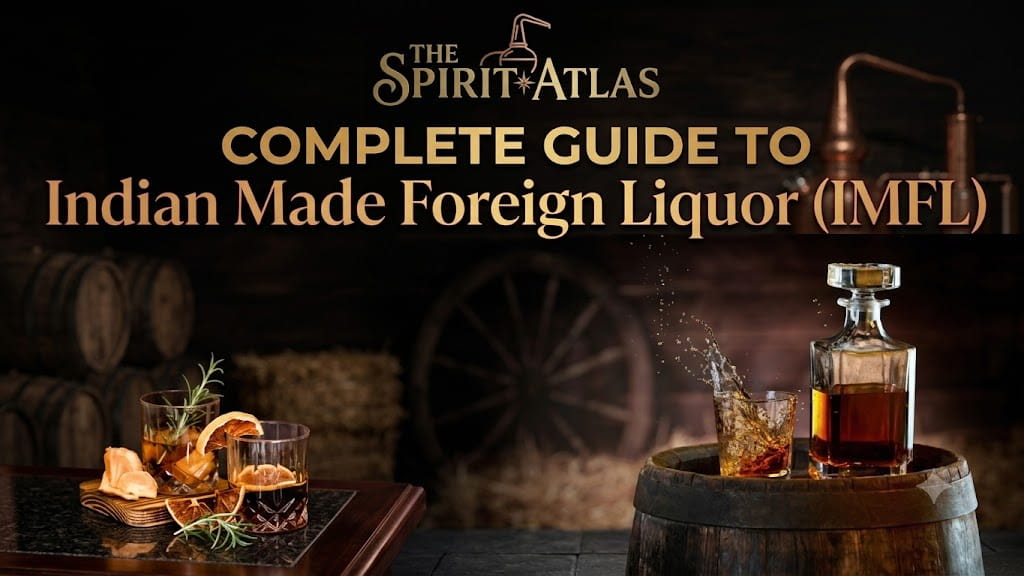
IMFL stands for Indian Made Foreign Liquor. It is the official government classification used across India to refer to all branded spirits manufactured within the country — whisky, rum, gin, vodka, brandy, and wine. The term covers every major bottle you see on a liquor store shelf: Royal Stag, Blenders Pride, Old Monk, McDowell's No.1, Officer's Choice, Indri, and hundreds more. All of them are IMFL.
Here is where most people get confused: IMFL is not imported. It is made right here in India. The word "foreign" in the name is a colonial-era hangover from British administration, when the Indian government needed a way to distinguish Western-style spirits (whisky, rum, gin) from traditional indigenous drinks like feni, toddy, and arrack. The classification stuck around because India's excise licensing and taxation system was built on top of it and has never been restructured. In 2026, it still appears in every state excise notification, liquor vend licence, and MRP slab document across the country.
So the simplest way to remember it: IMFL = branded spirits made in India. Nothing foreign about it except the name.
IMFL vs Country Liquor vs Imported Foreign Liquor: What is the Difference?
India actually has three distinct regulatory categories for alcohol, and mixing them up leads to genuine confusion when reading price lists or excise news.
IMFL (Indian Made Foreign Liquor) covers all Western-style spirits manufactured in India — whisky, rum, gin, vodka, brandy, and wine produced under modern distillery processes. Think Blenders Pride, Royal Stag, Bacardi India, Beefeater made under licence in India.
Country Liquor refers to traditionally produced, lower-ABV regional drinks — mahua, arrack, feni, toddy. These are produced locally, often informally, regulated under separate excise slabs, and priced significantly lower. When you read about a state government hiking "country liquor prices" separately from "IMFL prices," this is the distinction they are drawing.
Imported Foreign Liquor (IFL) or Bottled in Origin (BIO) covers spirits produced outside India and imported. Scotch whisky from Scotland, Cognac from France, Bourbon from the United States. These carry customs duty of around 150% on entry into India, which is why a bottle of Johnnie Walker Black Label costs roughly three to four times what it costs in the UK.
There is also a fourth category worth knowing: Bottled in India (BII) — spirits produced abroad, imported in bulk, and bottled inside India at an excise bonded warehouse. Some Scotch brands use this route to reduce retail price slightly while still being technically imported.
For a practical breakdown of what different whisky types cost across India right now, check our IMFL whisky price guide and the Scotch whisky price guide where we track state-wise MRP regularly.
Why Does the IMFL Classification Still Matter in 2026?
You might wonder why a colonial-era label still has any relevance. The answer is purely administrative and financial — it matters enormously for pricing, licensing, and taxation.
Every state government in India levies excise duty on IMFL separately from country liquor and imported spirits. The IMFL excise slab determines what you pay for Royal Stag in Maharashtra versus Karnataka versus Goa. When Maharashtra hiked excise duty on IMFL from three times manufacturing cost to 4.5 times in 2025, it was specifically this IMFL classification that determined which bottles got more expensive and by how much.
Liquor vend licences in every state are issued separately for IMFL retail, country liquor retail, and FL-2 (imported foreign liquor). A shop licensed to sell IMFL cannot legally sell imported Scotch without an additional licence. This is why you will sometimes find a neighbourhood wine shop that stocks Royal Stag but not Johnnie Walker — the licences are different and the second one costs more.
The IMFL market is also massive by any measure. IMFL is forecasted to account for 66% of total Indian alcoholic beverages market revenue. The IMFL market grew approximately 13% to 350 million cases in 2022, with whisky representing two-thirds of the overall market. India ranks among the largest alcohol markets globally, and the overwhelming majority of what Indians drink is IMFL, not imported spirits.
Top IMFL Whisky Brands in India (2026)
Whisky dominates IMFL sales — it accounts for roughly two-thirds of all IMFL consumed in India. Here are the brands that define the category across different price tiers.
Officer's Choice — The World's Bestselling Whisky
Made by Allied Blenders and Distillers, Officer's Choice is not just the best-selling IMFL whisky in India — it regularly features as one of the highest-volume whisky brands in the world by cases sold. Priced under Rs 400 for a 750ml in most states, it is the go-to choice for volume buyers across tier-2 and tier-3 cities. Simple, grain-forward, and consistent.
Royal Stag — Seagram's Flagship
Produced by Pernod Ricard India under the Seagram's brand, Royal Stag is the dominant IMFL whisky in urban India. Its Barrel Select variant has been one of the fastest-growing expressions in the premium IMFL segment. Priced between Rs 700 and Rs 900 for 750ml depending on state, it hits the sweet spot between affordability and quality. Check the Royal Stag price guide for current state-wise MRP.
McDowell's No.1 — Diageo's Volume Giant
United Spirits (owned by Diageo) produces McDowell's No.1, which has been a cornerstone of Indian IMFL for decades. Available across virtually every state, it comes in whisky, rum, and brandy variants — making it one of the few IMFL brands that spans multiple spirit categories at scale. See current prices on our McDowell's No.1 price page.
Blenders Pride — The Prestige IMFL Standard
Also from Pernod Ricard India, Blenders Pride is the brand that defined "prestige IMFL" for a generation of Indian drinkers. At Rs 900 to Rs 1,200 for 750ml across most states, it sits at the boundary between mass-market and premium. Its Reserve Collection variant pushes further into premium territory. Full pricing on the Blenders Pride price page.
Indri — India's Award-Winning Single Malt
Made by Piccadily Distilleries in Haryana, Indri has become the face of the new Indian single malt movement. It is technically IMFL — made in India, classified under Indian excise law as IMFL — but it competes directly with Scotch single malts on quality and increasingly on price. Radico's Rampur and Piccadily's Indri are commanding prices higher than many global Scotch brands. Indri won multiple international awards and is the single malt most frequently cited when Indian whisky comes up in global conversations. See our Indri price and review page for current pricing.
Imperial Blue — The Urban Mid-Segment Staple
Another Pernod Ricard India product, Imperial Blue (commonly called IB) is the reliable mid-range IMFL whisky that fills the gap between budget brands and Blenders Pride. Widely available, consistent across batches, and priced in the Rs 400 to Rs 600 range in most states. Its "men will be men" advertising campaign made it one of the most recognisable IMFL brands in India through the 2010s.
Top IMFL Rum Brands in India
Rum is the second-largest IMFL category after whisky, and India has some genuinely iconic expressions in this space.
Old Monk — The Cult Classic
Mohan Meakin's Old Monk is arguably the most beloved IMFL brand in Indian drinking culture. A dark, vatted rum aged a minimum of seven years, it has survived decades of competition from global brands purely on the strength of its taste and its deeply embedded cultural identity. The Rs 200 to Rs 300 price point for 750ml in most states makes it one of the best value IMFL buys anywhere. Check our Old Monk price guide for state-wise pricing.
McDowell's No.1 Rum
The rum variant of the McDowell's brand is one of the highest-selling IMFL rums in India, particularly strong in South India and Maharashtra. Available in Celebration and Platinum variants at different price points.
Bacardi India
Bacardi's India operations produce its white rum locally, making it technically IMFL despite the global brand name. This is a good example of how the IMFL classification covers even internationally branded products when they are manufactured within India.
Top IMFL Gin Brands in India
The Indian craft gin category has exploded over the last five years, and gin sales in India grew 129% in one recent measured period — making it the fastest-growing IMFL segment by percentage.
Stranger and Sons
Made in Goa by Third Eye Distillery, Stranger and Sons was among the first serious Indian craft gins and remains one of the best. Botanical-forward with a distinctly Indian character from ingredients like Gondhoraj lime and Darjeeling green tea. Priced around Rs 2,000 to Rs 2,500 for 750ml. See our Indian craft gin guide for more.
Hapusa
Hapusa from Nao Spirits uses Himalayan juniper as its lead botanical, giving it a distinctly different profile from European-style gins. It has won international recognition and sits at the premium end of Indian craft gin pricing.
Greater Than
Also from Nao Spirits, Greater Than is a more approachable London Dry-style gin at a friendlier price point than Hapusa. It has been one of the most consistently reviewed Indian gins in international spirits competitions.
The Premiumisation Story: Where IMFL is Heading in 2026
The most significant trend in IMFL right now is not volume growth — it is the shift upward in price tiers. The most critical trend in 2026 is the shift from quantity to quality, with consumers trading up from cheap country liquor to prestige and luxury IMFL. This premiumisation trend is reshaping which brands grow fastest and which companies invest most aggressively in new launches.
The practical result for consumers is a richer market. Five years ago, if you wanted a high-quality Indian whisky, your options were limited to a handful of brands. Today, Indri, Rampur, Paul John, Amrut Fusion, Godawan, and Sangam World Malt all compete for the same premium shelf space that was previously dominated by imported Scotch. All of them are IMFL. All of them are made in India. And several of them regularly outscore comparable Scotch expressions in international blind tastings.
The upcoming EU-India Free Trade Agreement, if ratified, could ease import duties on Scotch and European spirits — which would increase competitive pressure on premium IMFL. But most industry analysts believe Indian single malts have built enough quality reputation and price advantage to hold their ground even if Scotch becomes cheaper to import.
For price tracking across all tiers of IMFL, our IMFL whisky section and Indian Single Malt guide are updated regularly with the latest state-wise MRP as excise revisions happen.
Frequently Asked Questions
What is the full form of IMFL?
IMFL stands for Indian Made Foreign Liquor. It is the official regulatory classification used by state and central governments in India to refer to all branded spirits manufactured within the country, including whisky, rum, gin, vodka, and brandy.
Is IMFL imported or made in India?
IMFL is made in India, not imported. The word "foreign" in the name is a colonial-era administrative holdover from British rule, when the term was used to distinguish Western-style spirits from traditional Indian drinks like feni and toddy. In 2026, it remains purely a regulatory label with no connection to the origin of the product.
What is the difference between IMFL and country liquor?
IMFL covers branded Western-style spirits made in India — whisky, rum, gin, vodka, brandy. Country liquor refers to traditionally produced regional drinks like arrack, mahua, and toddy. They are taxed differently, licensed separately, and sold through different channels in most states.
Which are the top IMFL brands in India?
The top IMFL brands by sales volume include Officer's Choice, Royal Stag, McDowell's No.1, Blenders Pride, Imperial Blue, and Old Monk rum. In the premium segment, Indri, Rampur, Paul John, and Amrut are the leading Indian single malts that compete internationally.
Is Scotch whisky IMFL?
No. Scotch whisky is imported from Scotland and classified as Imported Foreign Liquor (IFL) or Bottled in Origin (BIO). However, some Scotch brands have their products bottled in India from bulk imports — this is classified as Bottled in India (BII), which is a separate category from both IMFL and fully imported spirits.
Why is the same IMFL brand priced differently in different states?
Because alcohol is a state subject under the Indian Constitution, each state sets its own excise duty, cess, and MRP independently. The same bottle of Royal Stag can cost Rs 150 to Rs 300 more in Karnataka compared to Goa purely because of different state excise structures. Read our detailed breakdown in the whisky price hike 2026 guide.
What does IMFL whisky mean specifically?
IMFL whisky refers to whisky manufactured in India under the IMFL regulatory classification. This includes everything from budget blends like Officer's Choice to premium expressions like Indri Single Malt and Rampur Indian Single Malt. All Indian-made whiskies, regardless of their quality tier or price, are classified as IMFL whisky under Indian excise law.
Is Old Monk rum an IMFL product?
Yes. Old Monk is produced by Mohan Meakin in India and is classified as IMFL. Despite being a dark rum aged a minimum of seven years with a distinct character, it falls under the same IMFL regulatory category as all other domestically produced spirits in India.